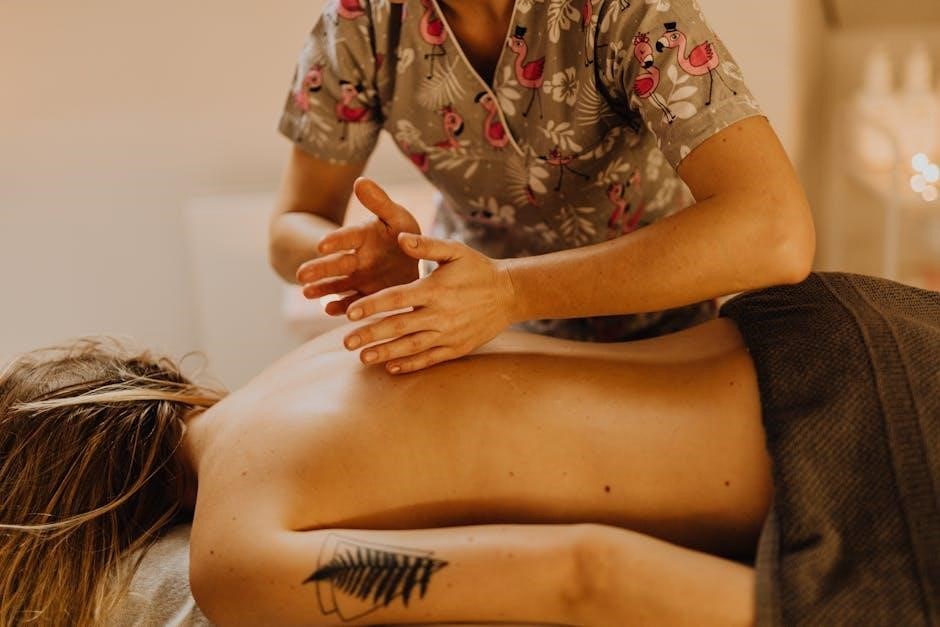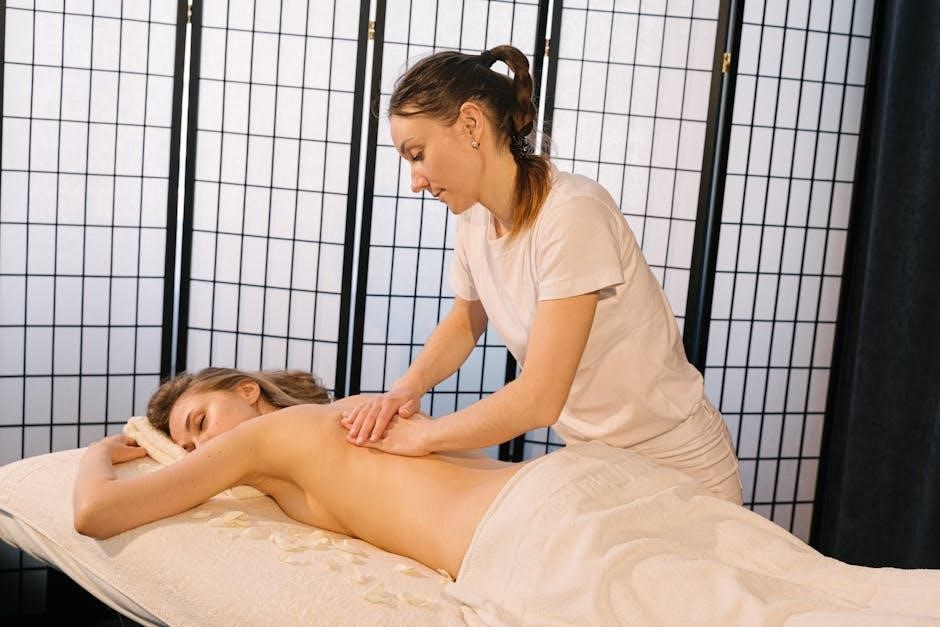
Full body massage, a comprehensive practice detailed in manuals like Francesca Rinaldi’s, offers holistic well-being. It’s a top-to-toe approach, blending techniques for head, face, and limbs, aiming to soothe modern stresses.
Benefits of Full Body Massage
Full body massage extends far beyond simple relaxation, offering a cascade of physiological and psychological benefits. As detailed in resources like “Whole Body Massage: The Ultimate Practical Manual,” this practice profoundly impacts both physical and mental health.
Physically, massage boosts circulation, delivering vital oxygen and nutrients to tissues. This improved circulation aids in muscle recovery, reduces tension, and alleviates chronic pain. Techniques targeting specific areas, like those found in step-by-step guides, can address localized discomfort. Furthermore, massage stimulates the lymphatic system, aiding detoxification and bolstering the immune response.
The psychological benefits are equally significant. Massage triggers the release of endorphins, natural mood elevators, reducing stress, anxiety, and even symptoms of depression. The focused attention and nurturing touch foster a sense of calm and well-being. A skilled therapist, as demonstrated in video tutorials, can create a deeply relaxing experience, promoting mental clarity and emotional balance. Ultimately, a full body massage is a powerful tool for holistic health, integrating mind and body for optimal wellness.
Historical Overview of Massage Techniques
Massage therapy boasts a rich and extensive history, evolving across cultures for millennia. Its roots trace back to ancient civilizations – China, India, Egypt, and Greece – where it was integrated into medical practices. Early forms, documented in ancient texts, focused on manipulating soft tissues to alleviate pain and restore balance.
Traditional Chinese Medicine (TCM) developed techniques like Tui Na, emphasizing meridian pathways and acupressure points. In India, Ayurveda incorporated massage (Abhyanga) with herbal oils for therapeutic purposes. The Greeks, notably Hippocrates, advocated massage for athletic training and healing. Roman physicians further refined techniques, recognizing their benefits for various ailments.
Over time, Swedish massage emerged in the 19th century, becoming a foundational technique in Western massage therapy. This system, emphasizing effleurage and petrissage, laid the groundwork for modern full body massage. Contemporary manuals, such as those referenced in available resources, build upon these historical foundations, integrating new knowledge and techniques to provide comprehensive and effective treatments. The evolution continues, adapting to modern needs and scientific understanding.
Preparation for a Full Body Massage
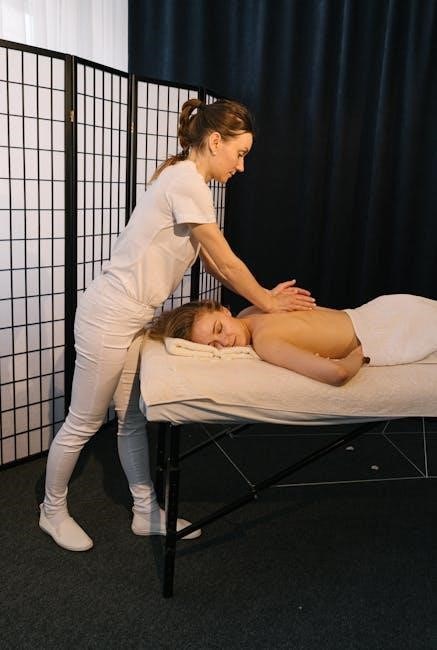
Proper preparation is crucial. Begin by washing hands and performing hand exercises, grounding yourself before the session. Ensure client comfort by having them lie prone under towels.
Client Consultation and Contraindications
Thorough client consultation is paramount before initiating any full body massage. This involves a detailed discussion regarding the client’s medical history, current health status, and any specific concerns or areas of discomfort. Understanding their expectations for the massage session is also vital for tailoring the treatment effectively.
Crucially, identifying contraindications is essential for client safety. Certain conditions preclude massage therapy or necessitate modifications to the techniques employed. These include, but aren’t limited to, fever, infectious skin diseases, acute inflammation, blood clots (thrombosis), recent surgeries, and certain types of cancer. Pregnancy also requires specialized considerations and often necessitates a modified approach.
Furthermore, inquire about allergies, particularly to essential oils if aromatherapy is planned. Clients should be asked about any medications they are taking, as these could interact with massage or aromatherapy. A responsible practitioner will always prioritize client well-being by carefully assessing these factors and adjusting the massage accordingly, or referring the client to a healthcare professional if necessary. Documenting this consultation is best practice.
Setting the Environment: Lighting, Temperature, and Music
Creating a serene and relaxing atmosphere is fundamental to a successful full body massage experience. Attention to detail regarding the environment significantly enhances client comfort and promotes deeper relaxation. Begin by adjusting the lighting; dim, soft illumination is preferred, avoiding harsh overhead lights. Consider using lamps with adjustable brightness or candles (with safety precautions) to create a calming ambiance.
Temperature control is equally important. The room should be comfortably warm, preventing the client from feeling chilled during the massage. A temperature between 68-72°F (20-22°C) is generally ideal, but adjust based on client preference. Ensure adequate ventilation to maintain fresh air circulation.
Music plays a crucial role in setting the mood. Opt for instrumental music with a slow tempo and calming melodies. Nature sounds, ambient soundscapes, or gentle classical music are excellent choices. The volume should be low enough to be unobtrusive, allowing for comfortable conversation if desired, but primarily serving to enhance relaxation. Prior to starting, ensure the client is comfortable with the chosen music.
Essential Oils and Aromatherapy Integration
Integrating aromatherapy with full body massage elevates the therapeutic experience, appealing to the holistic approach detailed in resources like those by Rinaldi and others. Essential oils, when used correctly, can enhance relaxation, reduce stress, and address specific client needs. However, careful consideration and proper dilution are paramount.
Before introducing any essential oil, a thorough client consultation is essential to identify allergies, sensitivities, and contraindications. Common choices include lavender for relaxation, chamomile for calming, and eucalyptus for respiratory support. Always use carrier oils – such as sweet almond, jojoba, or grapeseed oil – to dilute essential oils, typically to a 1-3% concentration.
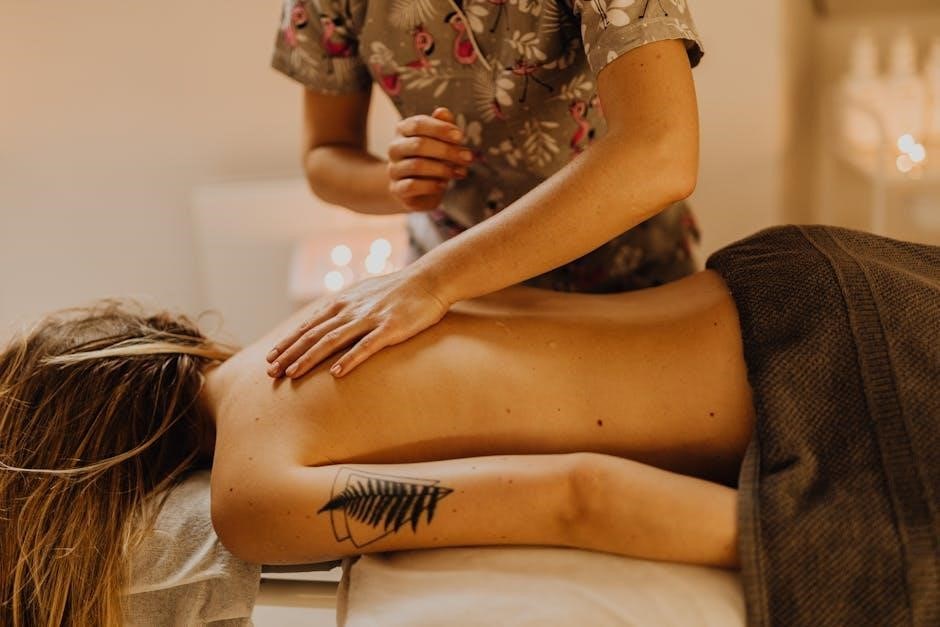
Application methods vary. Oils can be added directly to the massage oil blend, diffused into the room, or applied to specific acupressure points. Observe the client’s reaction throughout the massage and adjust accordingly. Remember, less is often more; a subtle aroma is more effective than an overpowering scent. Always prioritize client safety and comfort.
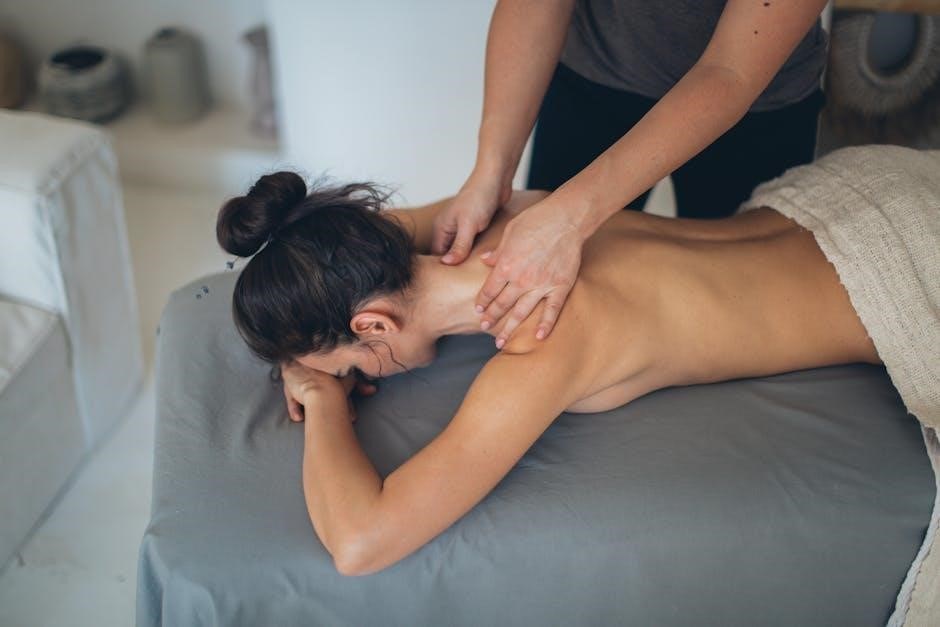
Massage Techniques: Lower Body
Lower body massage focuses on legs and feet, utilizing techniques like effleurage and petrissage. Firm thumb pressure on palms, as demonstrated in massage guides, promotes relaxation and circulation.
Leg and Foot Massage Techniques
Commencing with the legs, a foundational technique involves long, sweeping effleurage strokes, moving upwards towards the heart. This promotes venous return and eases muscle tension. Subsequently, petrissage – kneading and lifting the muscles – targets deeper tissues, releasing knots and improving circulation. Focus on the calf muscles, hamstrings, and quadriceps, varying pressure according to client comfort and tolerance.
Transitioning to the feet, begin with gentle warming strokes. Utilize thumb walking along the soles, applying consistent pressure. Pay particular attention to the arches and heels, areas prone to tightness. Circular friction techniques can be employed on the ankles and around the Achilles tendon.
Specific attention should be given to reflexology points on the feet, believed to correspond to various organs and systems within the body. Applying focused pressure to these points can stimulate healing and promote overall well-being. Remember to thoroughly massage each toe individually, gently pulling and rotating them to release tension. Always conclude with gentle effleurage strokes to soothe and calm the feet, preparing them for the remainder of the massage session. Proper hand washing and grounding are essential before beginning, as highlighted in routine preparation guides.
Back Massage Techniques: Effleurage and Petrissage
The back massage typically begins with broad, flowing effleurage strokes, utilizing the palms of the hands to cover large areas. These movements warm the tissues, establish a connection, and assess muscle tension. Apply even pressure, moving from the base of the spine upwards towards the shoulders, then back down along the sides. This initial phase prepares the back for deeper work.
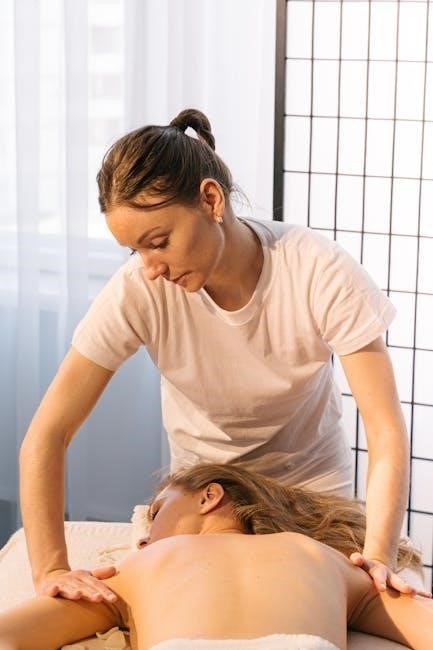
Following effleurage, petrissage techniques are introduced. This involves kneading, lifting, and rolling the muscles, targeting deeper layers of tissue. Focus on the major muscle groups – trapezius, latissimus dorsi, and erector spinae. Use the heels of the hands, knuckles, or fingertips to apply pressure, working along the muscle fibers.
Variations of petrissage include skin rolling and wringing, further loosening the muscles and improving circulation. Pay attention to areas of tightness or knots, applying sustained pressure to release them. Remember to maintain a comfortable pressure level for the client, constantly checking for feedback. Throughout, maintain smooth transitions between techniques, ensuring a seamless and relaxing experience. Proper body mechanics for the therapist are crucial to prevent fatigue and injury.
Abdominal Massage Techniques (with caution)
Abdominal massage, when performed, requires utmost sensitivity and a thorough understanding of contraindications. It’s rarely included in standard full body routines and demands careful client assessment. Gentle, clockwise circular motions are typically employed, following the natural path of the digestive system. This aids in stimulating peristalsis and relieving mild bloating.
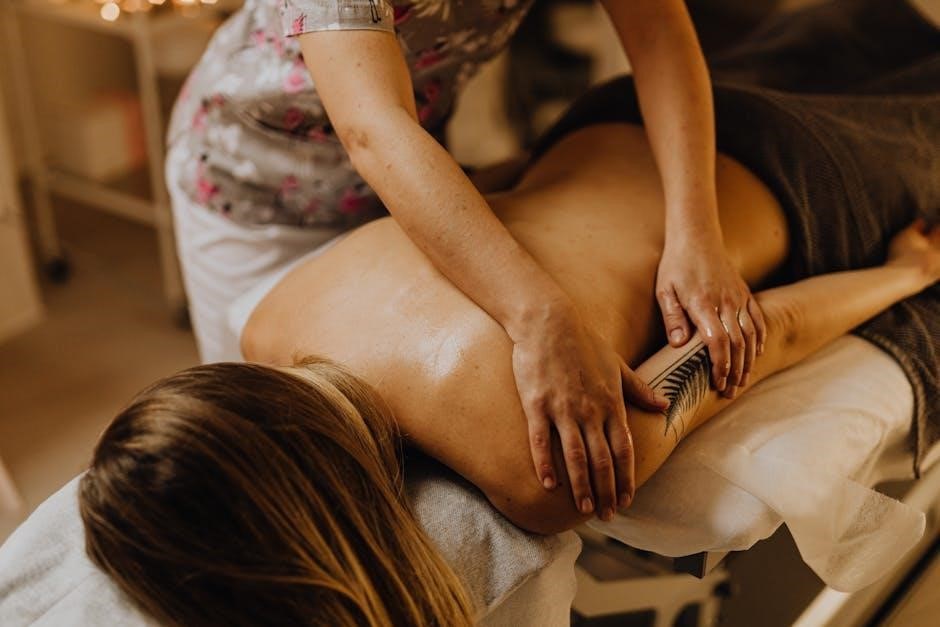
Pressure should be exceptionally light, barely indenting the skin. Avoid deep kneading or vigorous movements, as this can be uncomfortable or even harmful. Focus on broad, sweeping strokes rather than pinpoint pressure. The therapist’s hands should be warm and relaxed, creating a sense of safety and comfort for the client.
Contraindications are numerous: pregnancy, acute inflammation, hernias, recent surgery, intestinal obstructions, and any condition causing abdominal pain. Always obtain informed consent and continuously monitor the client’s response. If any discomfort arises, immediately cease the massage. This technique is best suited for clients seeking digestive support and should only be performed by trained and experienced practitioners.
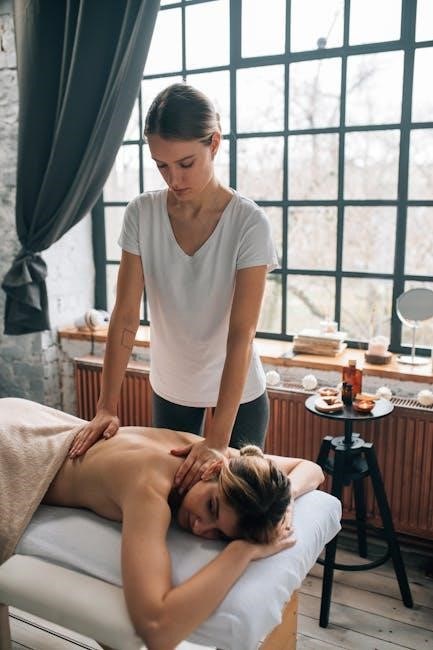
Massage Techniques: Upper Body
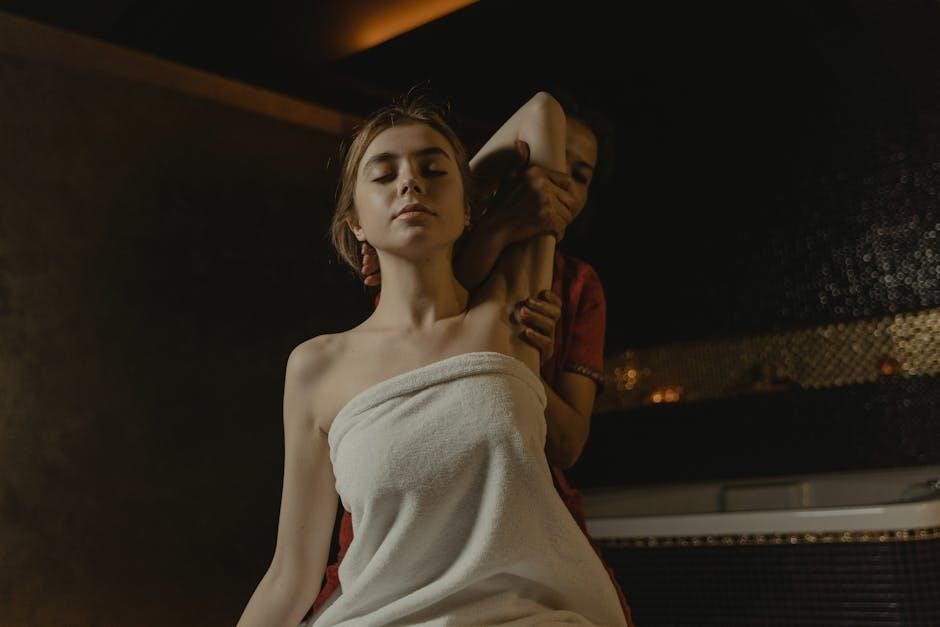
Upper body massage focuses on releasing tension in the shoulders, neck, arms, and chest. Techniques include effleurage, petrissage, and thumb compression, promoting relaxation and improved circulation.
Shoulder and Neck Massage Techniques
The shoulder and neck area often accumulate significant tension, making targeted massage crucial. Begin with gentle effleurage, using long, sweeping strokes to warm the muscles and assess tightness. Gradually increase pressure, focusing on the trapezius muscle – from the base of the skull down to the shoulder.
Petrissage, involving kneading and lifting the muscle tissue, is effective for releasing deeper knots. Use your thumbs and fingers to work along the muscle fibers, paying attention to areas of resistance. Circular friction can further break down adhesions.
For the neck, support the client’s head and use gentle strokes along the sides and back of the neck, avoiding direct pressure on the spine. Incorporate gentle stretching and range-of-motion exercises. Remember to ask for feedback regarding pressure and comfort levels throughout the process.
Specific techniques like thumb compression, applying focused pressure with the thumbs, can address trigger points in the shoulder and neck. Always work within the client’s pain tolerance and encourage deep breathing to enhance relaxation and release. Proper body mechanics for the therapist are essential to prevent strain.
Arm and Hand Massage Techniques
Commence arm massage with broad effleurage strokes, moving from the shoulder down to the wrist, establishing a connection and warming the tissues. Transition to petrissage, gently kneading the biceps, triceps, and forearm muscles. Utilize circular motions and wringing techniques to release tension and improve circulation.
Focus on the forearms, as they often hold considerable strain. Apply deeper pressure, working along the muscle fibers. For the hands, begin by gently stroking the back of the hand, then move to the palm, using your thumbs to apply firm pressure.
Individual finger massage is vital. Gently pull and rotate each finger, releasing tension in the joints. Use thumb pressure on the palm, moving outwards towards the sides of the hand, as highlighted in massage guides. Pay attention to the thenar and hypothenar eminences.
Encourage client feedback regarding pressure. Incorporate gentle stretching of the wrist and fingers. Remember proper hand positioning to prevent therapist fatigue. A well-executed arm and hand massage promotes relaxation and alleviates discomfort.
Chest and Torso Massage Techniques (considerations)
Massage of the chest and torso requires utmost sensitivity and professional boundaries. Always prioritize client comfort and obtain explicit consent before proceeding. Techniques should be adapted based on individual needs and contraindications, with a focus on superficial layers.
Begin with gentle effleurage strokes, following the natural contours of the ribcage, avoiding direct pressure on the sternum. Circular motions can help relax intercostal muscles, promoting deeper breathing. Light petrissage may be applied to the abdominal area, but with extreme caution and awareness.
Abdominal massage, if performed, should be gentle and clockwise, aiding digestion. Avoid deep pressure, especially in areas of tenderness or suspected medical conditions. Always respect the client’s boundaries and stop immediately if they experience discomfort.
Considerations include avoiding massage over the breasts, unless specifically requested and with clear understanding of professional ethics. Maintain a professional demeanor and draping techniques throughout. Prioritize client safety and well-being above all else;
Advanced Techniques & Considerations
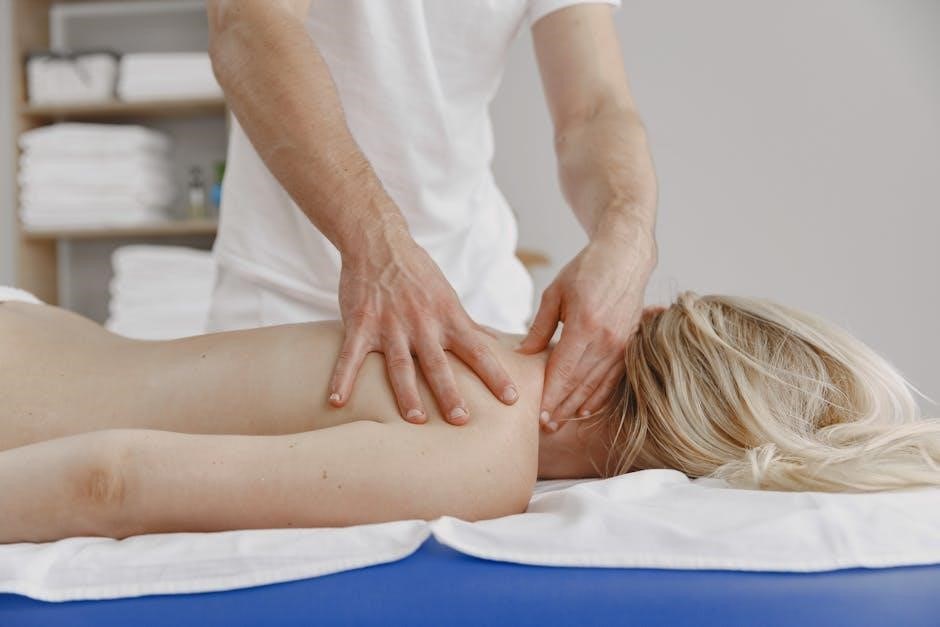
Advanced massage incorporates trigger point therapy and deep tissue work. Post-massage hydration is crucial for flushing toxins. Careful assessment and client communication are paramount for safe, effective results.
Trigger Point Therapy
Trigger point therapy focuses on identifying and releasing specific hypersensitive spots within skeletal muscles, known as trigger points. These points can cause localized pain, or refer pain to other areas of the body, creating a complex web of discomfort. Unlike broad, sweeping massage techniques, trigger point work is highly targeted.
The therapist applies sustained pressure to the trigger point, initially causing discomfort, which gradually subsides as the muscle fibers release. This process often involves ischemic compression – maintaining pressure until the pain diminishes, restoring normal blood flow and muscle function; It’s crucial to understand that trigger points aren’t simply knots; they represent areas of muscle dysfunction.
Effective trigger point therapy requires a thorough understanding of anatomy and pain referral patterns. Practitioners must be able to accurately locate trigger points and assess their impact on surrounding tissues. While often incorporated into a full body massage, it can also be a standalone treatment for chronic pain conditions. Careful client communication is essential, as the pressure can be intense, and the therapist needs to gauge the client’s tolerance and response.
Resources like comprehensive massage manuals detail specific trigger point locations and techniques for various muscle groups, aiding therapists in providing effective and targeted relief.
Deep Tissue Massage Techniques
Deep tissue massage goes beyond superficial muscle layers, targeting chronic muscle tension and knots – adhesions – that develop over time. Unlike Swedish massage, which focuses on relaxation, deep tissue aims to release deeply held patterns of muscular holding. This is achieved through slower, more forceful strokes, utilizing the forearms, elbows, and knuckles, alongside fingers.
Techniques involve sustained pressure and friction across the grain of the muscle, breaking down adhesions and restoring optimal muscle length and function. It’s not about inflicting pain, but about working into the deeper layers, which can initially cause discomfort as restrictions are released. Proper body mechanics for the therapist are vital to avoid injury.
Deep tissue work requires a thorough understanding of anatomy and a gradual approach. Therapists typically start with lighter pressure, warming up the tissues before progressively deepening their strokes. Client communication is paramount, ensuring the pressure remains within their tolerance. Contraindications, such as acute inflammation or certain medical conditions, must be carefully considered.
Detailed guides on full body massage techniques often dedicate significant sections to deep tissue protocols, illustrating specific techniques for different muscle groups and providing guidance on safe and effective application.
Post-Massage Care and Hydration
Post-massage care is crucial for maximizing the benefits and minimizing potential side effects. Clients often experience a period of adjustment as their bodies process the release of tension and toxins. Encouraging adequate hydration is paramount; drinking plenty of water helps flush out metabolic waste products mobilized during the massage, reducing muscle soreness and fatigue.
Gentle stretching and light movement can further aid in muscle recovery and prevent stiffness. Clients should be advised to avoid strenuous activity for at least 24 hours, allowing their muscles time to rebuild. Warm baths with Epsom salts can also soothe muscles and promote relaxation.
Some individuals may experience mild soreness, similar to that felt after exercise – this is generally a sign that the massage has been effective. However, any persistent or severe pain should be reported to the therapist. Detailed full body massage technique resources emphasize the importance of educating clients on expected post-massage sensations.
Listening to your body and respecting its needs is key. Continued self-care, including regular stretching and mindful movement, will help maintain the benefits of the massage long after the session ends.