
Haydn Violin Concerto in G Major: A Comprehensive Guide

Exploring readily available PDF versions of Haydn’s concerto reveals resources like IMSLP’s Petrucci Music Library and commercial sheet music options for violinists.
Historical Context of the Concerto
Franz Joseph Haydn composed his Violin Concerto in G major around 1792, during his first visit to London, commissioned by Johann Peter Salomon. This period marked a significant chapter in Haydn’s career, influencing his compositional style with English musical tastes. The concerto reflects the late Classical period’s emphasis on elegance, balance, and clarity.
Interestingly, despite its quality, the concerto remained relatively obscure for nearly two centuries. Its rediscovery and subsequent rise in popularity are linked to the availability of reliable scores, including those found in PDF format through resources like the IMSLP Petrucci Music Library. The accessibility of these digital scores has facilitated its study and performance, allowing musicians worldwide to engage with Haydn’s masterful work. The concerto’s historical journey underscores the importance of score preservation and dissemination.
Haydn’s Compositional Style
Franz Joseph Haydn’s compositional style is characterized by wit, elegance, and structural innovation, all evident in his Violin Concerto in G major. He masterfully balanced form and expression, employing clear melodic lines and harmonic progressions. His use of sonata form, particularly in the first movement, showcases his structural prowess.
The concerto’s accessibility is greatly enhanced by the availability of digital scores in PDF format. Resources like IMSLP provide musicians with convenient access to Haydn’s original intentions. This allows for detailed analysis of his techniques – the playful dialogues between the soloist and orchestra, the inventive use of ornamentation, and the overall sense of optimistic energy. Studying the PDF score reveals Haydn’s meticulous craftsmanship and his ability to create music that is both intellectually stimulating and emotionally engaging.
The Structure of the Concerto
Haydn’s Violin Concerto in G major adheres to the standard three-movement concerto form of the Classical period: Allegro moderato, Adagio, and Allegro. The first movement, in sonata form, establishes the primary thematic material. The second movement offers a lyrical contrast, showcasing the violin’s expressive capabilities. The lively finale returns to a brighter mood, concluding the work with virtuosity.
Accessing a PDF score is crucial for understanding this structure. Digital scores, readily available through platforms like IMSLP, allow performers and scholars to dissect Haydn’s architectural design. Examining the score reveals the careful placement of thematic statements, the development sections’ harmonic shifts, and the recapitulation’s satisfying resolution. The PDF format facilitates detailed study, enabling a deeper appreciation for Haydn’s masterful command of form and his ability to create a cohesive and engaging musical journey.
I. Allegro Moderato: First Movement Analysis
The Allegro moderato, presented in sonata form, begins with a charming orchestral exposition, introducing the primary themes. A PDF score illuminates the interplay between the strings and winds, revealing Haydn’s elegant orchestration. The violin enters with a graceful solo passage, developing the established motifs. The development section modulates through various keys, showcasing Haydn’s harmonic ingenuity.

Studying the PDF allows for a detailed examination of the thematic transformations and contrapuntal textures. Observing the score reveals Haydn’s skillful use of dynamics and articulation. The recapitulation restates the initial themes in the tonic key, providing a sense of closure. A readily available PDF version is invaluable for analyzing the intricacies of this movement, offering insights into Haydn’s compositional techniques and stylistic nuances.
II. Adagio: Second Movement Exploration
The Adagio, a lyrical and expressive movement, offers a contrasting emotional landscape to the energetic Allegro. Accessing a PDF score unveils Haydn’s delicate melodic writing and harmonic sophistication. The violin takes center stage, delivering a poignant and introspective solo line, beautifully supported by the orchestra. The movement’s structure is relatively simple, allowing the focus to remain on the expressive qualities of the music.
A PDF facilitates a close examination of the ornamentation and phrasing, crucial for conveying the movement’s emotional depth. Observing the score reveals Haydn’s masterful use of suspensions and appoggiaturas. The Adagio’s serene character is enhanced by its gentle dynamic contours and flowing rhythms. A readily available PDF version is essential for understanding the nuances of this movement and appreciating Haydn’s lyrical genius.
III. Allegro: Third Movement Breakdown
The final Allegro is a vibrant and spirited rondo, bringing the concerto to a joyful conclusion. A PDF score provides a detailed view of Haydn’s playful interplay between the soloist and orchestra. The movement is characterized by its lively tempo, clear articulation, and engaging melodic ideas. Examining the PDF reveals the rondo form (ABACA), with recurring themes interspersed with contrasting episodes.
The violin part demands technical agility and precision, showcasing the instrument’s brilliance. A PDF allows for careful study of the fingerings, bowings, and dynamic markings. Haydn’s use of scales, arpeggios, and double stops adds to the movement’s virtuosity. Access to a PDF version is invaluable for performers seeking to master the technical challenges and capture the exuberant spirit of this concluding Allegro.
The Role of the Violin in the Concerto
The violin assumes a prominent role as the melodic voice and virtuosic centerpiece of Haydn’s concerto. A readily available PDF score illuminates how Haydn expertly balances the instrument’s expressive capabilities with orchestral support. The violin engages in dialogues with the orchestra, showcasing both lyrical passages and dazzling displays of technical skill.
The concerto isn’t merely a vehicle for showcasing violinistic prowess; it’s a collaborative effort. A PDF reveals Haydn’s careful orchestration, which complements and enhances the violin’s melodic lines. The instrument’s role evolves throughout the three movements, from elegant phrasing in the Adagio to spirited flourishes in the Allegro. Accessing a PDF allows musicians to fully appreciate the nuanced interplay between soloist and ensemble.
Technical Challenges for the Violinist
Haydn’s Violin Concerto in G Major presents several technical hurdles for performers, readily apparent when studying a PDF score. Rapid scale passages, demanding arpeggios, and intricate ornamentation require exceptional dexterity and precision. The first movement’s Allegro moderato tests the violinist’s ability to maintain clarity and control at a brisk tempo.

Furthermore, the concerto demands a refined bowing technique to navigate its lyrical phrases and articulate its dynamic contrasts. A detailed PDF reveals the subtle nuances of Haydn’s phrasing, requiring the violinist to possess a sensitive musicality alongside technical skill. Mastering the concerto necessitates not only technical proficiency but also a deep understanding of its stylistic context, all accessible through careful score study via a PDF.
Notable Recordings and Performers
Exploring PDF scores of Haydn’s concerto often inspires investigation into celebrated performances. Hilary Hahn’s interpretation is widely acclaimed for its technical brilliance and expressive depth, offering a modern perspective. Anne-Sophie Mutter delivers a performance characterized by its elegance and refined phrasing, showcasing her exceptional musicality.
Numerous other significant violinists have contributed noteworthy recordings, each bringing a unique artistic vision to the work. Accessing a PDF score alongside listening to these interpretations allows for a comparative study of stylistic choices and technical approaches. Examining the score while listening enhances understanding of the performer’s decisions and Haydn’s compositional intent, enriching the overall listening experience and appreciation.
Hilary Hahn’s Interpretation
Hilary Hahn’s recording of the Haydn Violin Concerto in G Major is frequently sought after by those studying the PDF score. Her performance stands out for its remarkable clarity and precision, demonstrating a deep understanding of Haydn’s classical style. Hahn’s technical mastery allows her to navigate the concerto’s challenges with apparent ease, while simultaneously conveying a sense of playful energy.
Comparing her interpretation with the PDF reveals how she articulates Haydn’s melodic lines and dynamic contrasts. Musicians often use the score to follow her phrasing and intonation choices. Hahn’s approach offers a compelling example of how to balance technical proficiency with musical expression, making her recording a valuable resource for both performers and listeners alike.
Anne-Sophie Mutter’s Performance
Anne-Sophie Mutter’s rendition of the Haydn Violin Concerto in G Major provides a contrasting perspective when studied alongside the available PDF scores. Her interpretation is characterized by a rich, vibrant tone and a heightened emotional intensity. Mutter’s performance emphasizes the lyrical qualities of the concerto, bringing a romantic sensibility to Haydn’s classical framework.
Examining her phrasing and dynamic choices in relation to the PDF score reveals a nuanced approach to ornamentation and articulation. Musicians can analyze how she shapes the melodic lines and creates a sense of dramatic tension. Mutter’s performance offers a compelling example of how to infuse Haydn’s music with personal expression, making it a valuable resource for aspiring violinists.
Other Significant Violinists
Beyond Mutter and Hahn, numerous violinists have contributed compelling interpretations of Haydn’s G Major Concerto, often documented in recordings accessible alongside PDF scores. Players like Isabelle Faust offer historically informed performances, prioritizing clarity and adherence to stylistic conventions. Her approach, when compared to the score, highlights Haydn’s elegant simplicity.

Furthermore, Gil Shaham’s recordings demonstrate a blend of technical brilliance and expressive depth. Studying these performances in conjunction with readily available PDF versions allows musicians to dissect the nuances of phrasing, bowing techniques, and overall musicality. Analyzing diverse interpretations enriches understanding and provides valuable insights for developing one’s own informed performance practice, enhancing the learning experience from the score.
Finding Sheet Music and Scores
Locating sheet music for Haydn’s Violin Concerto in G Major is increasingly accessible, with numerous online resources offering PDF versions. The International Music Score Library Project (IMSLP), or Petrucci Music Library, stands as a primary source for public domain scores, providing free, downloadable PDFs of both the solo violin part and the orchestral score.
Beyond IMSLP, commercial sheet music retailers like Musicnotes.com and Sheet Music Plus offer purchasable PDF downloads, often including professionally edited versions with fingerings and bowings. YouTube tutorials, sometimes linking to downloadable parts, can supplement these resources. Searching specifically for “Haydn violin concerto G major pdf” yields a wealth of options, catering to varying skill levels and budgetary constraints, ensuring musicians can readily access the music.
Availability of PDF Versions
The digital age has significantly broadened access to PDF versions of Haydn’s Violin Concerto in G Major, catering to violinists and enthusiasts worldwide. IMSLP (the Petrucci Music Library) provides a free, legal source for the score and parts, offering a reliable foundation for study and performance. Numerous websites also host downloadable PDFs, though verifying copyright and editorial accuracy is crucial when utilizing these sources.
A quick online search reveals options on platforms like YouTube, where videos often accompany links to sheet music PDFs. Musescore.com also features user-submitted arrangements, including the concerto, in PDF format. The prevalence of these resources demonstrates the concerto’s enduring popularity and the ease with which musicians can now obtain the music.
IMSLP Petrucci Music Library
The International Music Score Library Project (IMSLP), also known as the Petrucci Music Library, stands as an invaluable resource for musicians seeking public domain sheet music. It offers a readily accessible, high-quality PDF of Haydn’s Violin Concerto in G Major, encompassing both the full score and individual instrumental parts. This digital library is legally compliant, hosting works whose copyrights have expired, ensuring ethical access to classical repertoire.
IMSLP’s version of the concerto is meticulously scanned and often available in multiple editions, allowing users to compare different interpretations and historical versions. The site’s user-friendly interface facilitates easy navigation and download, making it a primary destination for violinists, conductors, and scholars alike. It’s a cornerstone for studying and performing this beloved concerto.
Commercial Sheet Music Options
Beyond the free resources of IMSLP, several commercial publishers offer meticulously prepared editions of Haydn’s Violin Concerto in G Major in PDF format. These options often include Urtext editions, striving for accuracy based on the composer’s original manuscripts, and are available through online music retailers like Musicnotes.com, Sheet Music Plus, and directly from publishers such as Henle Verlag and Bärenreiter.

Purchasing commercial sheet music provides advantages like professionally edited fingerings, bowings, and cadenzas, often curated by renowned violinists. These editions frequently feature clearer layouts and higher-quality printing than scans found elsewhere. While requiring a financial investment, they cater to performers seeking a polished and reliable resource for serious study and performance, offering a premium experience.
Piano Accompaniment Resources
Finding a reliable piano accompaniment for Haydn’s Violin Concerto in G Major is crucial for effective practice and performance. Alongside the full score PDFs available commercially and on IMSLP, dedicated piano reduction PDFs are frequently offered. These reductions simplify the orchestral part for piano, allowing violinists to rehearse with a collaborative pianist.
Resources like Sheet Music Plus and Musicnotes.com often sell separate piano accompaniment PDFs. Furthermore, YouTube provides valuable resources, including play-along tracks – specifically, a version at 115 bpm is available, aiding in tempo consistency. These tracks, while not a substitute for a live pianist, offer a convenient practice tool. Careful consideration of the piano part’s tempo and rhythmic nuances is essential for a cohesive performance.
YouTube Tutorials and Play-Along Tracks
YouTube serves as a valuable supplementary resource for learning and practicing Haydn’s Violin Concerto in G Major, complementing PDF scores. Numerous videos offer performance analyses, fingering suggestions, and technical guidance from experienced violinists. Searching specifically for “Haydn Violin Concerto G major” yields a wealth of content, including tutorials breaking down challenging passages.
Crucially, play-along tracks are available, providing a simulated orchestral experience. A track at 115 bpm, often linked with PDF score resources, allows violinists to practice with accurate tempo. While these tracks aren’t a replacement for live accompaniment, they’re ideal for independent practice; Be mindful of video quality and the performer’s interpretation when selecting tutorials, ensuring alignment with your musical goals. Resources often link to IMSLP for score access.
Haydn Violin Concerto G major piano part (115 bpm)
The piano part, often sought alongside the full score in PDF format, is crucial for rehearsal and performance of Haydn’s concerto. A tempo of 115 bpm is frequently utilized for practice, providing a solid foundation for both soloist and accompanist. Finding a reliable PDF of the piano reduction is essential, with IMSLP being a primary source for public domain scores.

Many YouTube tutorials and play-along tracks utilize this tempo, facilitating synchronized practice. The piano part isn’t merely supportive; it actively participates in the musical dialogue. Accessing a clear, well-edited PDF allows pianists to thoroughly prepare, understanding the harmonic structure and rhythmic nuances. Combining the PDF with audio resources enhances learning and ensures a cohesive performance.
Analyzing the Piano Part
A detailed examination of the piano part, readily available in PDF scores, reveals its sophisticated role beyond simple accompaniment. The reduction, often found on platforms like IMSLP, showcases Haydn’s masterful orchestration translated for two hands. Careful analysis highlights the harmonic support, rhythmic drive, and occasional melodic interplay with the violin.
PDF versions allow for close study of the piano’s countermelodies and textural contributions. Understanding the piano’s function is vital for a balanced performance. The part isn’t merely a simplified version; it’s a thoughtful adaptation retaining the concerto’s essence. Studying the score reveals Haydn’s intent, enriching the pianist’s interpretation and fostering a deeper connection with the music.
Tempo and Rhythm Considerations
Examining PDF scores of Haydn’s concerto reveals a generally accepted tempo of around 115 bpm, as indicated in resources like YouTube tutorials and piano part transcriptions. However, a nuanced approach to tempo is crucial. While Allegro Moderato suggests a moderate pace, flexibility within movements enhances musicality.
Rhythmic precision is paramount, demanding clarity and articulation from both performers. PDF versions facilitate detailed rhythmic analysis, exposing subtle nuances in Haydn’s notation. Pay attention to phrasing and dynamic markings, which significantly impact the rhythmic feel. Modern interpretations often explore slight tempo variations for expressive effect, but maintaining a core rhythmic stability remains essential for a successful performance, guided by the score’s indications.
Orchestral Accompaniment and Arrangements
PDF scores of Haydn’s Violin Concerto in G Major highlight the interplay between the soloist and the orchestral accompaniment. While full orchestral PDFs are readily available on platforms like IMSLP, practical performance often involves piano reduction versions, also found as PDFs.
These piano arrangements condense the orchestral texture, presenting a challenge for pianists to capture the harmonic richness and rhythmic drive of the original. Studying both the full score and the piano reduction PDF provides valuable insight. Arrangements for chamber orchestras also exist, offering alternative performance possibilities. Understanding the orchestral voicings, even in a reduced format, informs the violinist’s phrasing and dynamic choices, creating a more cohesive and informed interpretation, guided by the detailed notation within the PDF.
The Concerto’s Influence on Later Composers
Accessing PDF scores of Haydn’s Violin Concerto in G Major reveals its structural clarity and melodic invention, qualities that profoundly impacted subsequent composers. The concerto’s influence is particularly noticeable in the works of Mozart and Beethoven, both of whom admired Haydn’s compositional style.
Mozart’s violin concertos, for instance, demonstrate a similar balance between soloistic display and orchestral dialogue, mirroring Haydn’s approach. Beethoven, while forging his own path, acknowledged Haydn’s influence on his early compositions. Studying the PDF allows tracing the evolution of the concerto form. The concerto’s elegant phrasing and harmonic language served as a model for later generations, solidifying Haydn’s place as a pivotal figure in the development of the classical concerto.
Connections to Mozart and Beethoven
The availability of Haydn’s Violin Concerto in G Major as a PDF facilitates a comparative study with the works of Mozart and Beethoven, revealing striking connections. Mozart, deeply influenced by Haydn, adopted similar structural principles and melodic grace in his own violin concertos, evident when examining scores side-by-side.
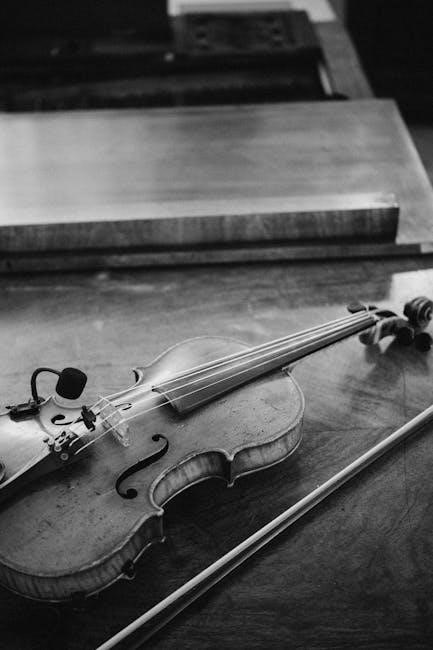
Beethoven, initially a student of Haydn, absorbed the older composer’s mastery of form and development. While Beethoven’s style evolved towards greater dramatic intensity, traces of Haydn’s influence remain visible in his early concertos. Analyzing the PDF score highlights Haydn’s pioneering role in establishing the classical concerto’s conventions, which both Mozart and Beethoven then expanded upon, creating a lineage of musical innovation.
The Concerto in Modern Performance
The widespread accessibility of the Haydn Violin Concerto in G Major as a PDF has significantly impacted its presence in modern performance practice. Digital scores empower violinists globally to engage with the work, fostering a surge in performances and interpretations.
Contemporary orchestras and soloists increasingly feature the concerto in their repertoire, driven by the ease of score acquisition. This accessibility encourages exploration of historically informed performance practices, allowing musicians to delve into Haydn’s stylistic nuances. The PDF format also facilitates collaborative study and rehearsal, benefiting both professional ensembles and student orchestras. Consequently, Haydn’s concerto enjoys renewed vitality, captivating audiences with its enduring charm and elegance.
Contemporary Interpretations
The proliferation of Haydn’s Violin Concerto in G Major PDFs has fueled diverse contemporary interpretations, allowing performers greater freedom in stylistic choices. Access to readily available scores encourages musicians to experiment with phrasing, dynamics, and ornamentation, moving beyond traditional approaches.

Modern recordings showcase a spectrum of interpretations, ranging from historically informed performances emphasizing clarity and elegance to more romanticized readings prioritizing expressive intensity. The ease of score access also empowers amateur and student violinists to develop their own unique interpretations, contributing to a vibrant and evolving performance landscape. This digital accessibility fosters a democratic approach to musical expression, enriching the concerto’s legacy for future generations.
Educational Value for Violin Students
The availability of Haydn’s Violin Concerto in G Major as a PDF significantly enhances its educational value for violin students of varying levels. Access to affordable, easily downloadable scores removes financial barriers, allowing more students to engage with this cornerstone of the violin repertoire.
The concerto’s clear structure and melodic lines make it ideal for developing fundamental violin techniques, including bowing control, intonation, and phrasing. Studying the score alongside recordings fosters critical listening skills and encourages students to analyze Haydn’s compositional style. Furthermore, the concerto provides a valuable platform for exploring Classical-era performance practices and developing a nuanced understanding of musical expression. The PDF format facilitates annotation and personalized study, maximizing its pedagogical impact.
Using the Concerto for Teaching
The readily accessible PDF format of Haydn’s Violin Concerto in G Major presents numerous opportunities for effective teaching. Instructors can easily share the score with students, annotate it digitally for focused instruction, and create customized exercises based on specific passages.
The concerto’s moderate technical demands make it suitable for intermediate to advanced students, allowing them to develop musicality alongside technical proficiency. Teachers can utilize the concerto to illustrate Classical-era form, harmonic principles, and stylistic conventions. Furthermore, the availability of piano accompaniment resources – often found alongside the PDF score – facilitates collaborative learning and performance practice. The concerto’s inherent beauty and engaging melodies inspire students, fostering a positive learning experience and a lifelong appreciation for classical music.

Further Research and Resources
Delving deeper into Haydn’s Violin Concerto in G Major, researchers can explore scholarly articles analyzing its compositional techniques and historical context. Online databases and musicological journals offer valuable insights. Accessing the concerto’s PDF score through platforms like IMSLP (Petrucci Music Library) provides a foundation for detailed analysis.
YouTube tutorials and play-along tracks, often linked to PDF resources, can aid in performance preparation. Examining different editions of the score reveals editorial choices and variations. Investigating related works by Haydn, Mozart, and Beethoven illuminates the concerto’s place within the Classical repertoire. Exploring recordings by renowned violinists – such as Hilary Hahn and Anne-Sophie Mutter – offers diverse interpretative perspectives, enriching understanding and appreciation of this timeless masterpiece.